
There’s a debate consuming the Western world right now. AI and unemployment. Will AI take our jobs? Will it destroy the middle class?
It’s a legitimate debate. For them.
For underdeveloped markets? It’s the wrong conversation entirely.
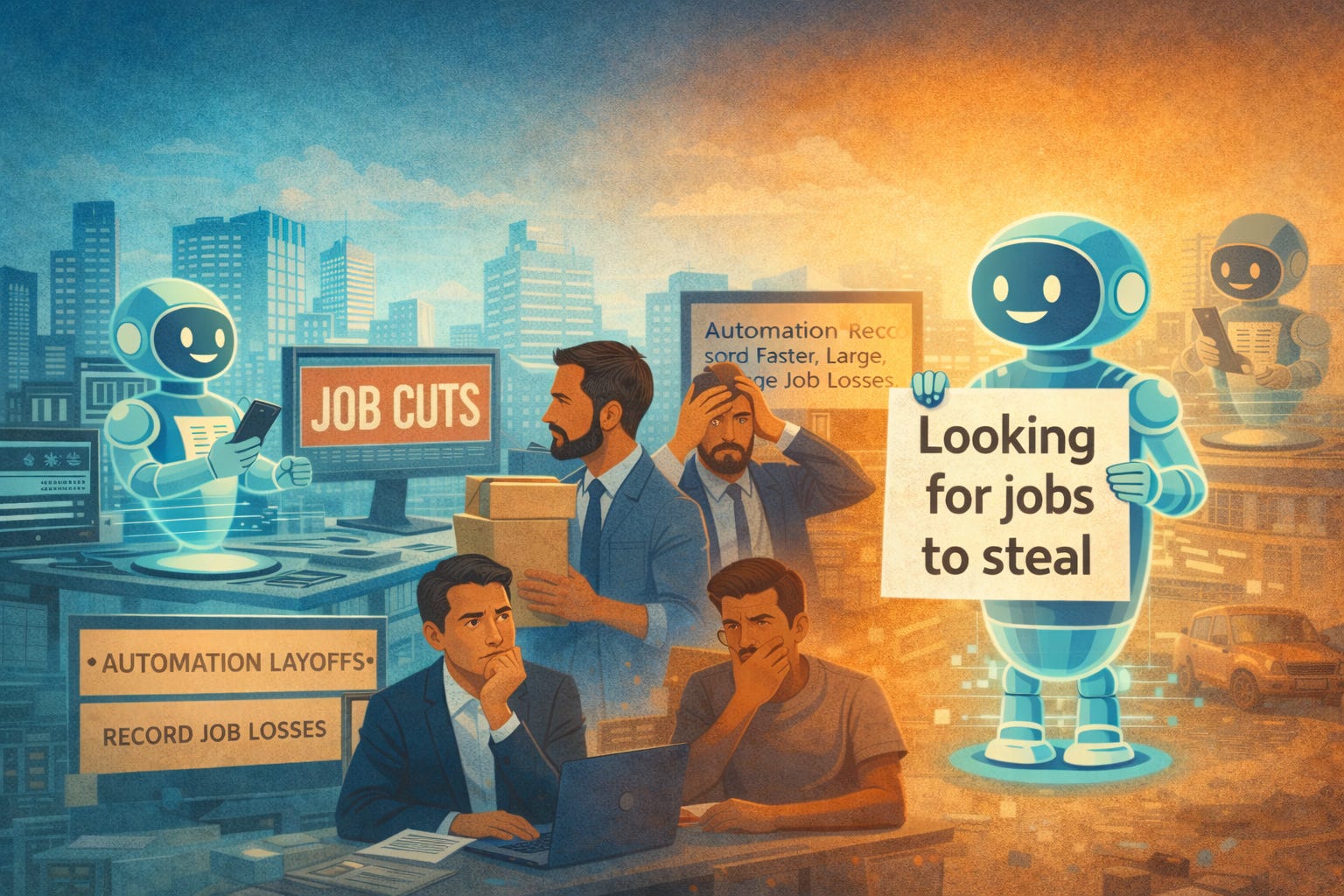
Two Very Different Problems
Developed markets have low unemployment. 3%, 4%, 5%. People have jobs. Productivity is already high. The fear is real: AI automates tasks, people lose positions. They’re fighting to protect what they have. Looking for marginal gains. Incremental. Careful.
Underdeveloped markets have the opposite problem.
Youth unemployment exceeds 50% in many African countries. Informal work dominates. Productivity per worker is a fraction of developed-world levels. Infrastructure barely functions.
This isn’t a market where AI threatens to disrupt a functioning system. The system isn’t functioning.
So when someone says “AI will cause unemployment” - the honest response is: what employment?
The Dangerous Combination
Underdeveloped markets face two problems simultaneously.
High unemployment. Millions of young people with no formal work. No career path. Just waiting. Sports betting has become the default pastime for a generation with nothing productive to do. That’s not leisure. That’s despair with a mobile app.
Low productivity. The people who are working aren’t producing at anywhere near their potential. Not because they’re incapable - because the systems around them are broken.
Together, these create something dangerous: a large, young, idle population in an economy that can’t generate enough value to absorb them. That’s not a productivity challenge. That’s a stability risk.
The Wrong Fear, The Right Opportunity
“Won’t AI make unemployment worse?”
Unemployment is already catastrophic. It’s not 5% trending toward 8%. It’s 50%. AI isn’t going to automate away jobs that don’t exist. You can’t lose what you never had.
AI isn’t the threat here. The status quo is the threat.
Now flip the question. Instead of “will AI destroy jobs?” ask: “can AI fix the productivity disaster?”
Underdeveloped markets don’t need 3% efficiency bumps. They need leaps. Massive, transformative leaps.
Potholes that never get fixed. Blackouts that cripple businesses. Ports that take weeks to clear. A teacher-to-student ratio of 1:80. Clinics with no specialists. Rural areas with no doctors.
AI can attack all of it. Not in theory. Right now. Infrastructure planning, power grid optimisation, logistics, personalised education on a phone, diagnostic tools on a smartphone reaching every village health worker.
There is so much to fix. So much room for productivity to explode - not by percentages, but by multiples.
From Productivity to Employment
There’s an old story about Milton Friedman visiting a construction site in Asia. Workers were building a canal with shovels. When he asked why no heavy machinery, the official said: “This is a jobs programme.” Friedman replied: “Oh, I thought you were trying to build a canal. If it’s jobs you want, give them spoons instead of shovels.”
Underdeveloped markets have been stuck in the spoon economy for decades. AI is the excavator. Not to eliminate the workers. To finally build the canal.
The “productivity up, employment down” fear applies when you’re optimising an already-efficient system. But underdeveloped markets aren’t optimising. They’re building from scratch. The output doesn’t exist yet. The services aren’t being delivered. The infrastructure isn’t built.
When AI drives productivity here, it doesn’t eliminate existing jobs. It creates economic activity that generates new jobs. More construction planned means more workers needed. Better healthcare screening creates demand for delivery - clinics, supply chains, support staff.
Productivity creates economic activity. Economic activity creates employment. No more youth placing bets because there’s nothing else to do. Instead, a generation with AI tools, building what their countries desperately need.
The Leapfrog
Africa skipped landlines and went straight to mobile. No legacy systems to protect. No incumbents to manage. Just a straight line from problem to solution.
AI offers the same opening, at a much bigger scale.
Developed markets have to carefully manage AI adoption - unions, legacy systems, regulatory frameworks, a working population that reasonably fears disruption. Their path is incremental.
Underdeveloped markets have none of those constraints. The path isn’t incremental - it’s transformational. A 22-year-old in Nairobi with AI tools could outproduce an entire department operating the old way. Multiply that by millions.
Stop Importing the Wrong Fears
The developed world’s anxiety about AI and employment is valid - for the developed world.
Importing that fear into underdeveloped markets is paralysing. It makes us cautious when we should be aggressive. It makes us regulate when we should be experimenting. It makes us protect systems that aren’t working instead of building systems that could.
Every month spent debating whether AI will “take jobs” in a market with 50% youth unemployment is a month wasted. The jobs aren’t there. Let’s build them.
AI could be the spark. The technology exists to fix potholes, keep the lights on, unclog transport, educate children, deliver healthcare, and make businesses actually work. Those productivity gains could finally generate real employment at scale. Not aid-dependent. Not NGO-project. Real, commercially viable, self-sustaining employment.
We’ve been saying it in this newsletter: harness this technology. It could be the spark that lets underdeveloped countries leapfrog - not to parity overnight, but onto the path. Finally on the path.
The developed world is worried about AI disrupting what they have.
We should be excited about AI building what we don’t.
The fear of AI unemployment is a rich-country problem. Our problem is different. Our opportunity is different. And our urgency is greater.
Let’s stop borrowing their anxieties and start building our future.
What do you think? Is AI the productivity spark underdeveloped markets need? Reply and let me know - I read every response.
If this resonated, share it with someone who’s been told to fear AI. They might need to hear the other side.
This is what I have been telling people. The western world is a productivity economy. Even 1% productivity gain is enough to catch the attention of a CEO of fortune 500 company. They are willing to adapt whatever process or technology delivers that even at the expense of employee headcount. But this isn't the same in Africa as you have elaborated very well. Its only leaps in productivity that can catch the attention of management because these have very visible tangible results often reflected in profit margins for businesses and service delivery for gov't.