
There’s a narrative going around that AI will make humans obsolete. That we’re building our replacements. That in 10 years, maybe 20, there won’t be jobs left for people.
I don’t buy it.
Not because I’m naive about AI’s capabilities. I’ve seen what these systems can do. I work with them every day. They’re impressive. Sometimes unsettlingly so.
But here’s what the doomsayers keep missing: this is not new.
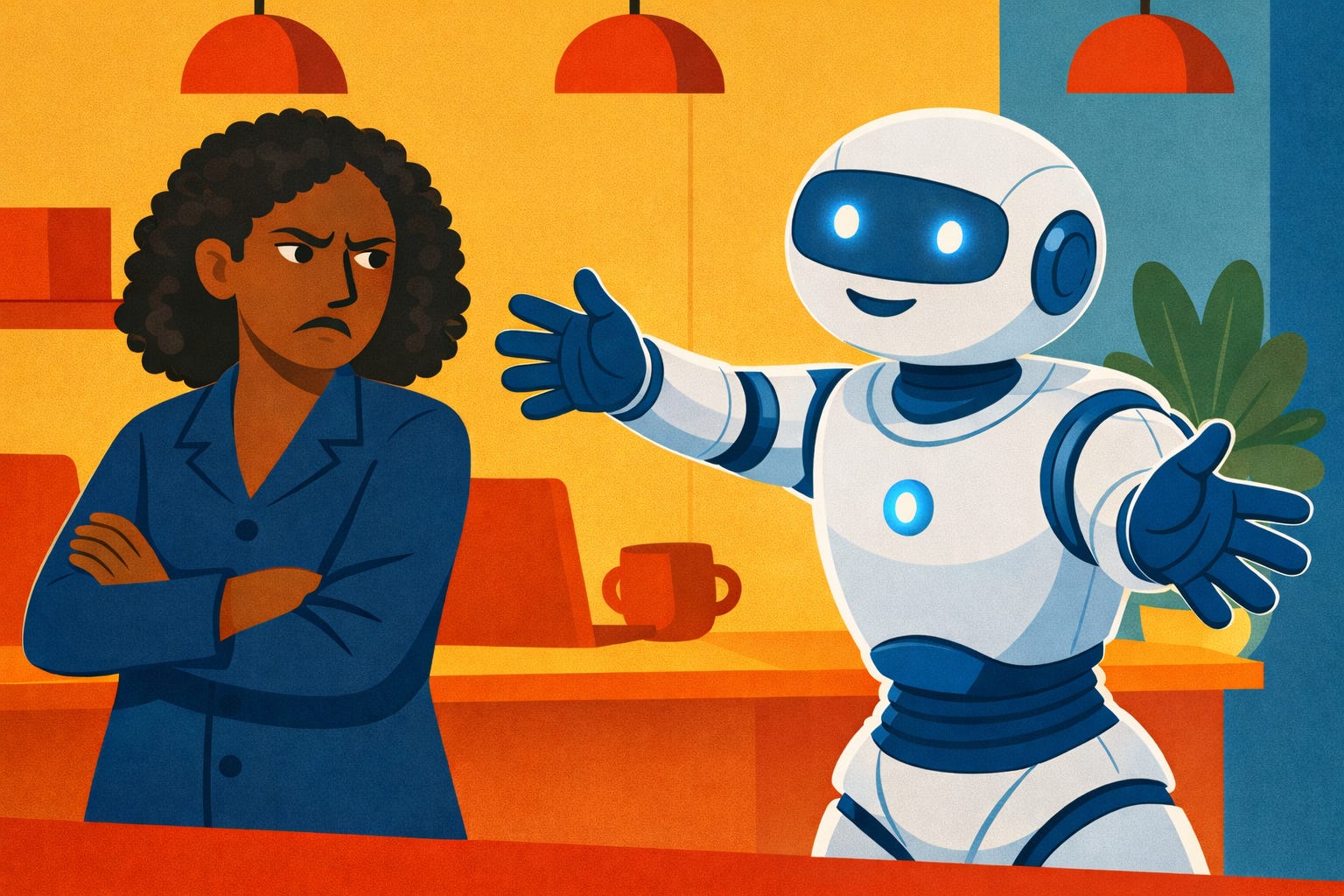
We’ve Been Here Before. Many Times.
Let me take you back.
When humans discovered fire, it replaced the need for raw food. When we invented the wheel, it replaced carrying things on our backs. When the printing press arrived, scribes who spent years copying manuscripts by hand found their skills suddenly worthless.
Each time, the same panic. Each time, the same prediction: this changes everything, people will have nothing to do.
And each time? We found more to do. Better things to do.
The agricultural revolution eliminated 90% of farming jobs. Today, less than 2% of people in developed economies work in agriculture. Did we end up with 90% unemployment? No. We invented new industries. New professions. New ways to create value.
The industrial revolution did the same. Machines replaced craftsmen. Factories replaced workshops. People rioted. They smashed machines. They were terrified.
And then? Productivity exploded. Living standards rose. Life expectancy doubled. We got education, healthcare, leisure time.
Tools disrupt. Tools replace. But tools also advance us.
The Math That Matters
Here’s where the “AI replaces everyone” argument falls apart.
Global GDP is roughly $105 trillion. The global workforce is about 3.5 billion people. That’s approximately $30,000 of output per worker per year, on average.
Now, AI optimists claim these systems will eventually be able to do everything humans can do. Let’s take that seriously for a moment.
If AI could do all human work, and we deployed it fully, what happens to that $105 trillion in output?
It doesn’t disappear. It doesn’t shrink. If anything, it grows, because AI doesn’t get tired, doesn’t take breaks, doesn’t make errors from fatigue.
So the output remains. The question is: who benefits?
This is a distribution problem, not a production problem. And distribution problems are solved by policy, by markets, by human choices, not by the technology itself.
The technology is neutral. What we do with it is not.
Yes, Jobs Will Be Lost
I’m not going to pretend otherwise.
Some jobs will disappear. Just like switchboard operators disappeared. Just like travel agents mostly disappeared. Just like typing pools disappeared.
If your job is purely routine, if it’s entirely predictable, repetitive, and requires no judgment, AI will probably do it better and cheaper. That’s the reality.
But here’s what’s also true: new jobs will emerge that we can’t yet imagine.
In 1990, “social media manager” wasn’t a job. “App developer” wasn’t a job. “Cloud architect” wasn’t a job. “Prompt engineer” wasn’t a job until two years ago.
The World Economic Forum estimates that 85 million jobs will be displaced by AI by 2025. Alarming, right?
But they also estimate 97 million new jobs will be created. Net positive: 12 million jobs.
And that’s a conservative estimate. It doesn’t account for entirely new industries we haven’t conceived yet.
Reskilling Is Real, Not a Buzzword
Here’s where I’ll be direct: the transition won’t be painless.
People will need to learn new skills. Some quickly. Industries will restructure. Some companies will fail because they didn’t adapt. Others will thrive because they did.
This isn’t comfortable. It’s messy. It requires investment in education, in training, in safety nets for those caught in the transition.
But “messy transition” is very different from “permanent mass unemployment.”
We managed the transition from agriculture to industry. From industry to services. From analog to digital. We’ll manage this one too.
The question isn’t whether humans will work. The question is what kind of work we’ll do.
What AI Actually Is
Let’s strip away the hype for a moment.
AI is a tool.
A very powerful tool. A tool that can process information faster than we can. A tool that can find patterns we’d miss. A tool that can automate tasks that used to require human attention.
But it’s still a tool.
Hammers didn’t replace construction workers. They made construction workers more productive. Spreadsheets didn’t replace accountants. They made accountants handle more complexity. The internet didn’t replace researchers. It made research faster and deeper.
AI will do the same.
The accountant using AI will replace the accountant who doesn’t. The doctor using AI will diagnose better than the doctor who doesn’t. The business owner using AI will outcompete the one who doesn’t.
The tool amplifies human capability. It doesn’t delete it.
Finally, the Good Stuff
Here’s what I’m actually excited about.
For decades, we’ve poured our best engineering talent into getting people to click ads. Into optimizing engagement. Into building systems that exploit human psychology for attention.
What do we have to show for it? Social media addiction. Polarization. Kids glued to screens. Adults doom-scrolling at 2 AM.
AI could change that.
What if we redirected this technology toward actual problems?
Healthcare: AI systems that catch cancer earlier, that accelerate drug discovery, that make quality healthcare accessible to the billions who currently can’t afford it.
Productivity: Finally eliminating the busywork that consumes 60% of knowledge workers’ time. Imagine if your team could focus on actual value creation instead of reconciling spreadsheets and chasing invoices.
Education: Personalized learning for every child on the planet. Not one teacher for 50 students, but AI tutors that adapt to each learner’s pace and style.
Science: Accelerating research in climate, energy, materials science. Problems that have been stuck for decades suddenly becoming tractable.
Maybe we’ll even get those flying cars. Instead of another app that wastes our time, maybe we’ll get technology that gives us our time back.
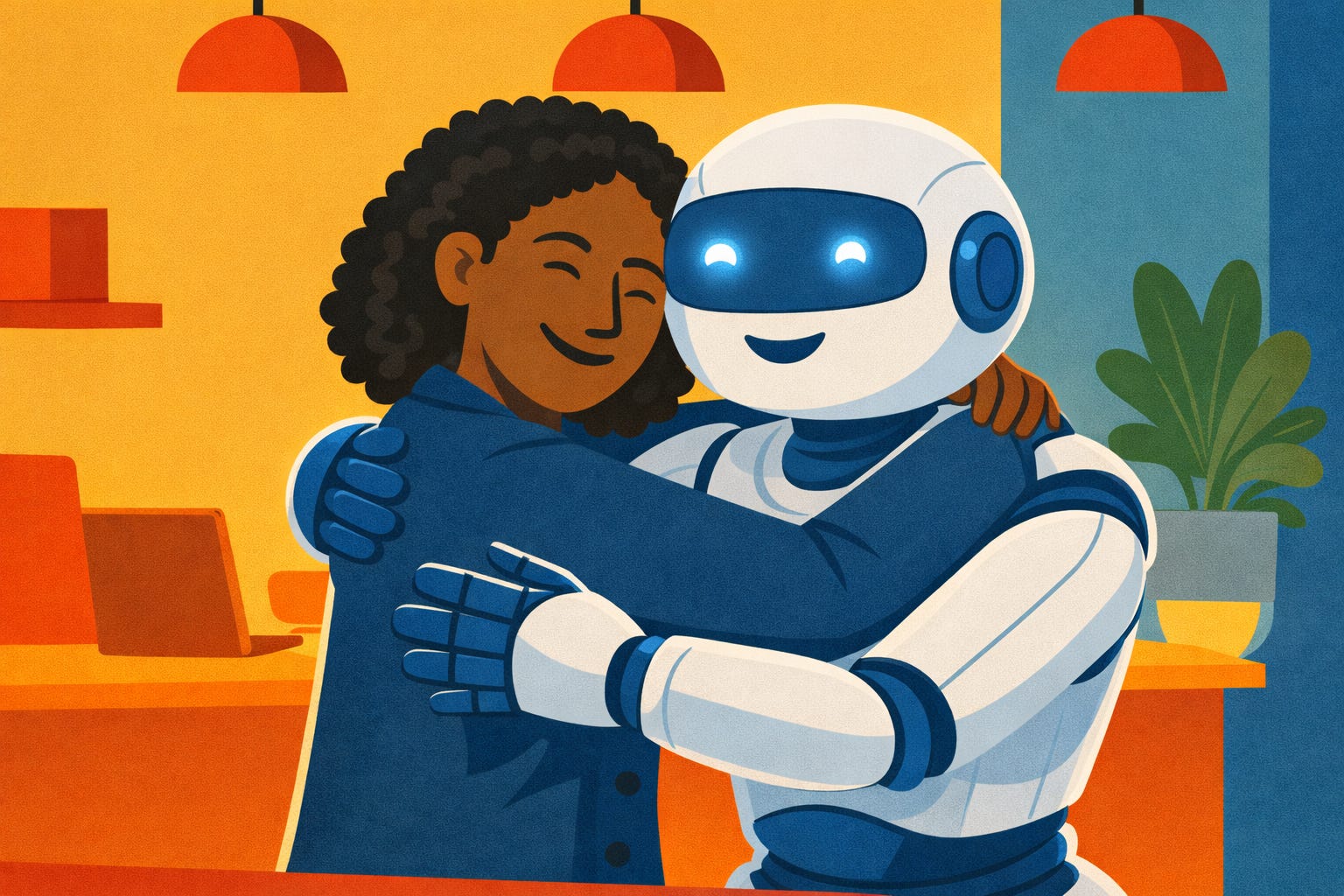
The Real Question
The “AI will replace everyone” crowd is focused on the wrong question.
They’re asking: Will AI be able to do what humans do?
The better question is: What will humans do when AI handles the drudgery?
History suggests: we’ll do more. We’ll create more. We’ll solve harder problems. We’ll find new ways to matter.
Humans have never defined themselves by the tasks they perform. We define ourselves by the problems we choose to solve, the meaning we create, the connections we build.
AI won’t replace that. AI can’t replace that.
It’s a tool. The most powerful tool we’ve ever built. But still a tool.
And tools, in human hands, have always made us more, not less.
The future isn’t human vs. AI. It’s human with AI.
That’s the math that matters.
What do you think? Are you optimistic or skeptical about AI’s impact on work? Reply and let me know, I read every response.
If you found this valuable, share it with someone who’s worried about AI taking their job. They might need to hear this.
This piece really made me think, particulary about how we frame technological progress. Your point about us having been here before with previous revolutions, like the printing press or industrial era, is incredibly insightful and often overlooked in current AI debates, and I find it so reassuring. But what if the next wave of 'more to do' requires a more profound rethinking of societal structures and education systems than previous shifts, making the transition less about job replacement and more about a fundamental redefinition of 'work' itself?